Gonka at WebX Tokyo 2026: inside the community-led push into Asia
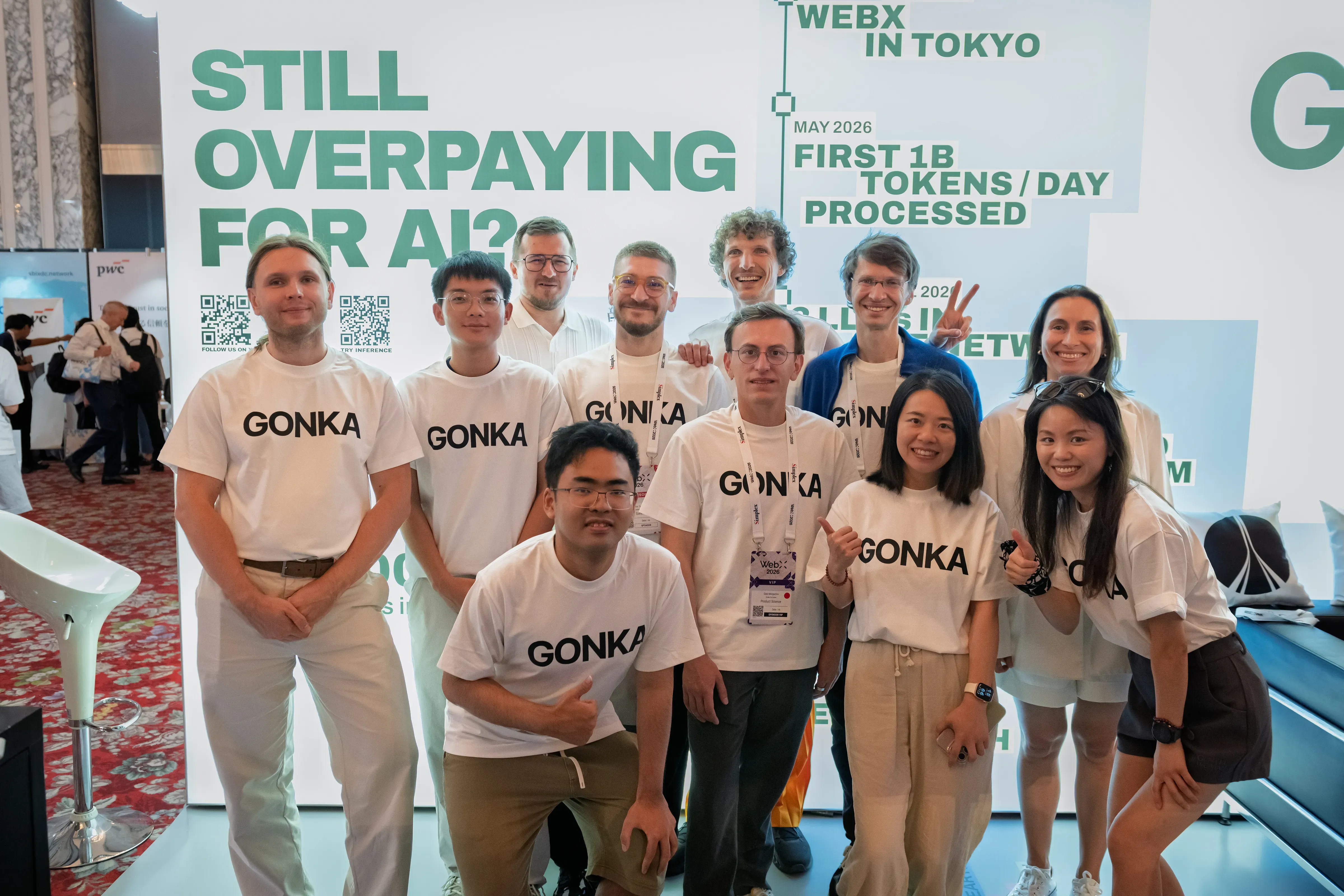
In late July, Gonka made its first major appearance in Asia as a Platinum Sponsor of WebX 2026 in Tokyo, a conference that brought together more than 20,000 attendees and over 200 sponsors. The initiative came from the community through a governance proposal and was organized by 6Block together with the protocol’s co-creators and other ecosystem participants.
Shortly after the conference, David and Daniil Liberman published their WebX recap, highlighting the first results: nearly 4,000 new registrations, more than 100 business contacts, speaking appearances, and meetings with potential partners.
Now that several weeks have passed and the first impressions have settled, we decided to take a closer look at the event — not only through the numbers and the official post-event report, but through the eyes of different Gonka community members who worked on the ground, took part in meetings, and saw the conference from the inside.
So what did WebX actually bring to Gonka — and how useful can conferences like this be for the protocol’s growth?
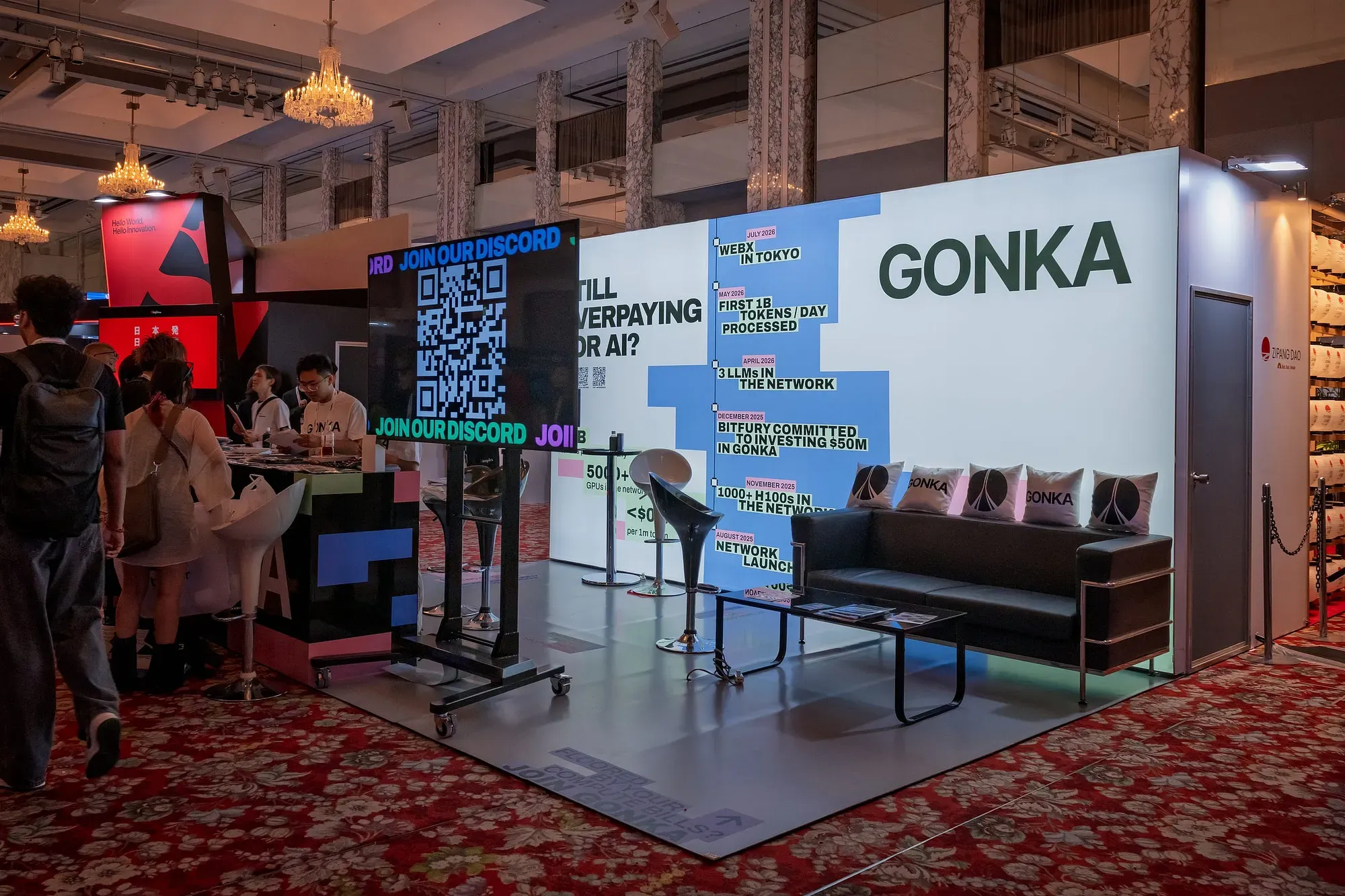
How the community built Gonka’s presence at WebX
According to Isabel Yang, a representative of 6Block — one of Gonka’s largest and longest-standing hosts — the idea of participating in WebX came from the fact that the conference brought together many of the groups Gonka wants to work with in Asia: from GPU providers and potential AI users to infrastructure companies, exchanges, investors, and media.
By the time the proposal was submitted, 6Block had already committed $75,000 of its own funds — half of the expected budget — to secure Gonka’s Platinum Sponsor status.
“We then asked the Gonka community to allocate another $75,000 from the Community Pool for execution. This shared-funding structure was important: 6Block assumed substantial financial responsibility while the community decided through governance whether the initiative should move forward,” Isabel says.
The Platinum package itself included media exposure, booth space, and a speaking slot. But building a full Gonka presence required much more: organizing travel for the team, producing the booth and merchandise, creating content, coordinating with partners, and participating in more than ten side events.
“Organizing it was demanding, but it proved that a decentralized community can coordinate an international presence at institutional scale,” Isabel notes.
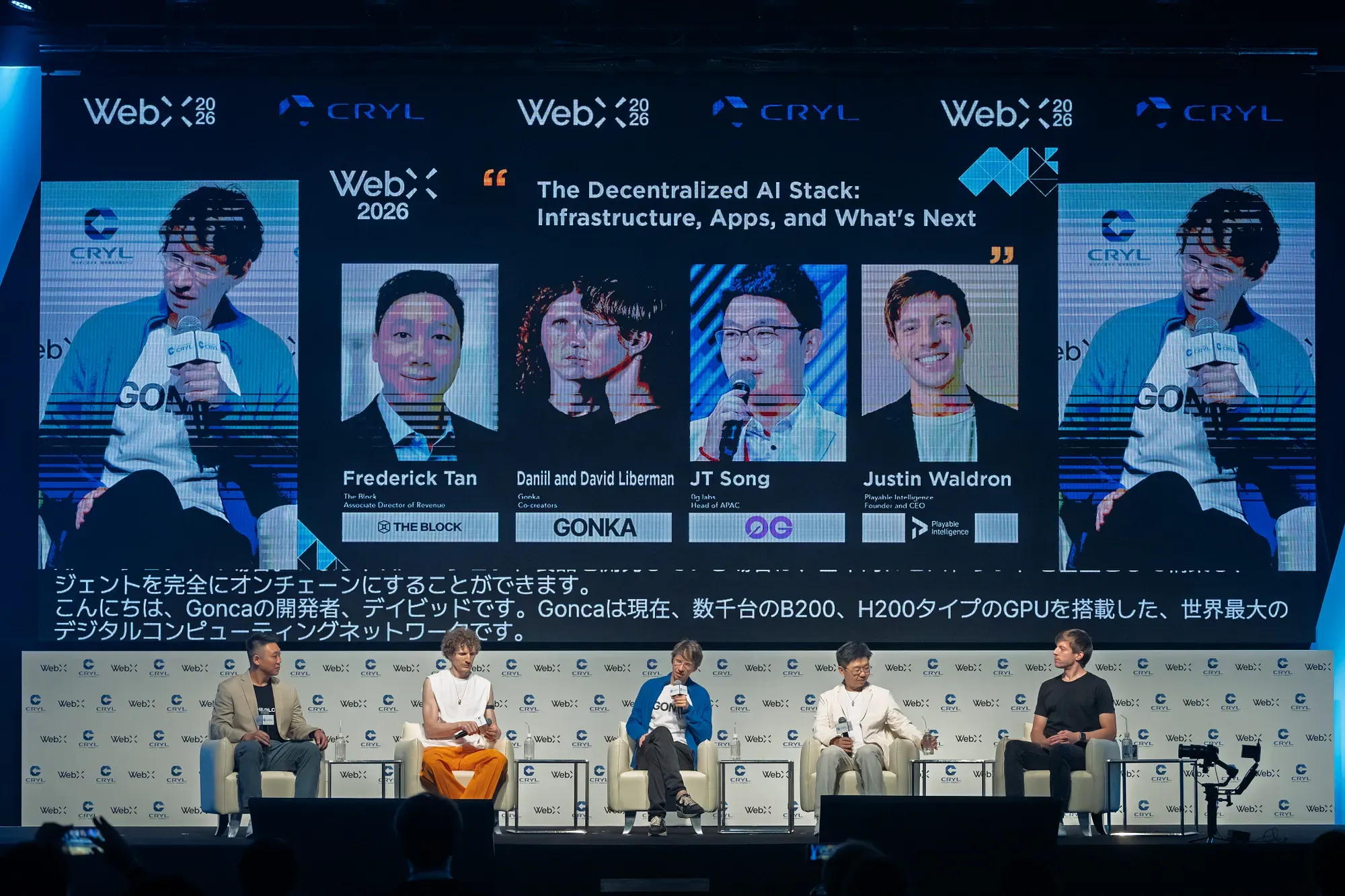
According to her, the combination of different formats worked particularly well:
“Gonka was present on the main stage, at a recognizable booth, in the VIP networking area, at private meetings, and across side events. This created multiple opportunities to explain the protocol to different audiences rather than relying on booth traffic alone.
The presentation also reflected Gonka’s real nature. We were not presenting a company-owned product.
Visitors saw a protocol whose participation had been proposed, approved, and funded by network participants. That made the decentralization story tangible.”
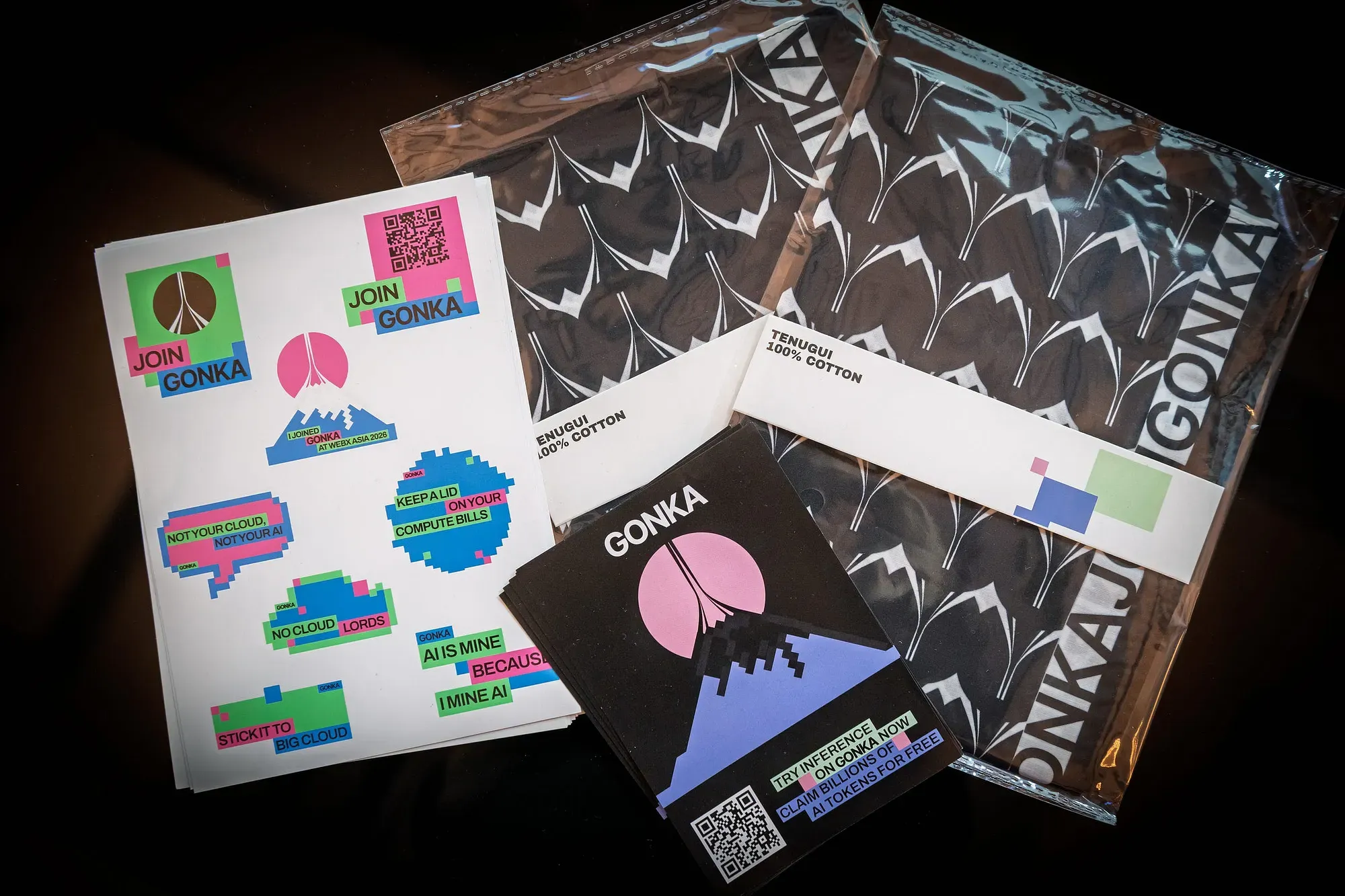
Local touches also helped Gonka stand out — including Japanese tenugui with Gonka branding and co-branded Tangem hardware wallets for priority partners. Direct technical conversations and David and Daniil Liberman’s appearance on the main stage also played an important role.
At the same time, Isabel sees several areas for improvement next time:
“I would arrange more business meetings in advance, strengthen Japanese and other local-language representation, begin targeted media outreach earlier, and organize a dedicated or jointly hosted side event. I would also establish even clearer attribution and follow-up ownership for every business lead and broker onboarding channel.”
First step into Asia: what worked and what could be measured
Sergey Ulankin, one of the organizers of Gonka’s presence at WebX, says one of the first things he noticed was how international the audience was. There were many Asian and global companies, but the specifics of the Japanese market were also clear:
“Japanese companies tend to be cautious and take time to build trust with new people and projects. Simply showing up at one conference is not enough. Relationships have to be built gradually, through repeated meetings and a continued presence in the region.
WebX was our first real step into the Asian market — we basically just got our feet wet. To build real and lasting relationships, we will need many more efforts like this.”
According to him, the team’s schedule was extremely packed. More than ten people who regularly work on the protocol were there in Tokyo. The highest-level negotiations were handled by co-creators David and Daniil Liberman, while the rest of the team was divided between the booth, meetings, and side events.
“We actually did not spend that much time together as a full group because we deliberately divided the team between different meetings and events. That approach worked well: we managed to attend everything we had selected in advance and speak with all the key categories of participants we wanted to reach,” he explains.
Ulankin made a similar observation about what worked best when presenting Gonka:
“The blockchain industry, especially in Asia, has become much more professional and institutional. So people were genuinely surprised when they learned that network participants had voted, come together, and brought the protocol to a major international conference themselves. That sparked real interest and helped explain how Gonka differs from conventional corporate projects.”
He sees having more people who speak local languages as one of the clearest areas for improvement. At future events in Korea, China, Singapore, and elsewhere, he believes Gonka will need more people who can communicate with local audiences directly in the language of each market.
“We were very lucky in Tokyo: one member of the 6Block team spoke Japanese and handled a huge number of conversations at the booth. By the end of the event, he was completely drained,” he recalls.
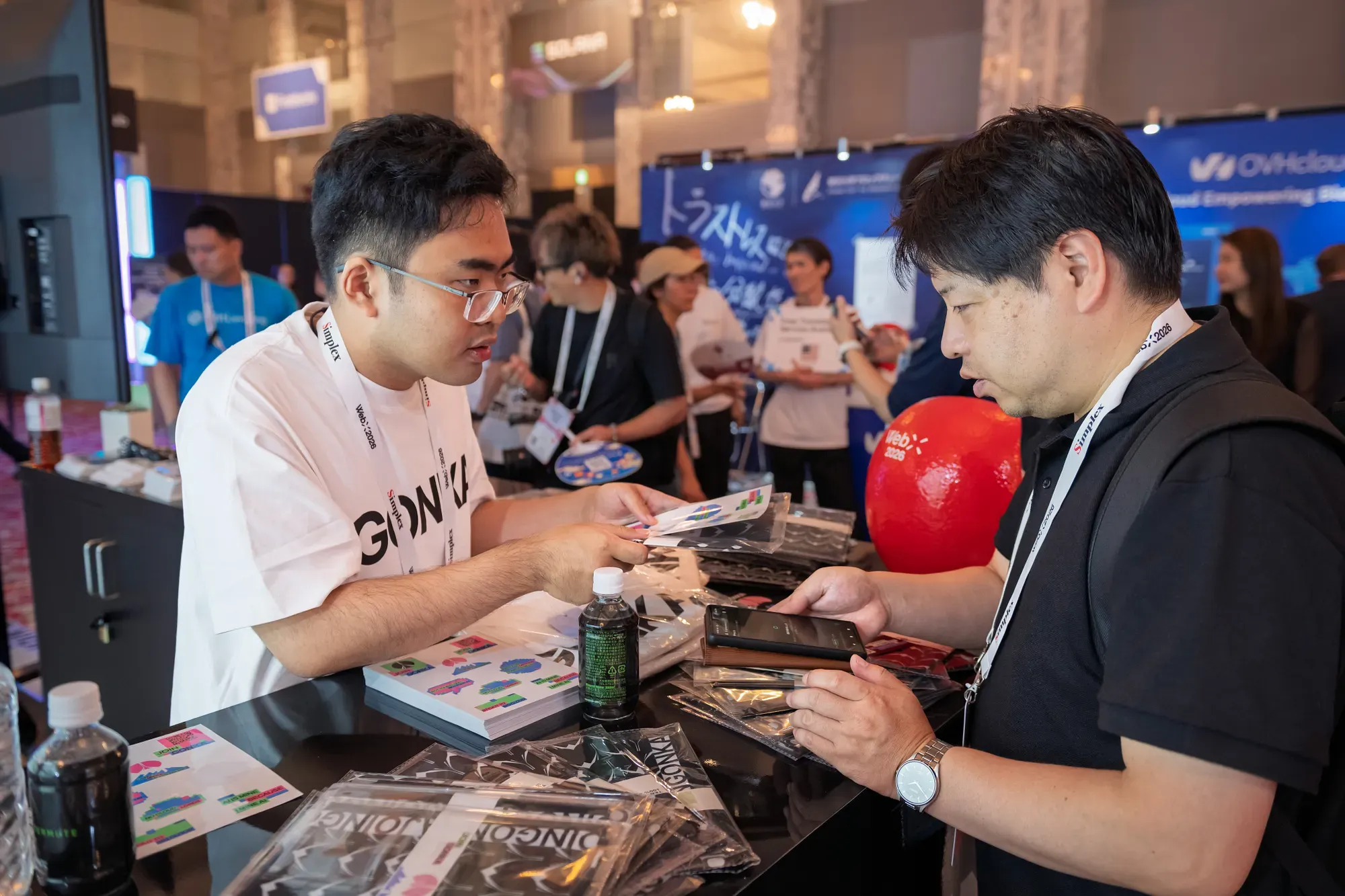
Sergey Ulankin also explained how the team assessed the connection between WebX and nearly 4,000 new registrations across two Gonka brokers — GonkaRouter and Dahl:
“With GonkaRouter, attribution was fairly precise. The team created a dedicated landing page linked through a special QR code that appeared at the booth, in the demo video, and on printed materials. That made it possible to separate registrations coming through the landing page from regular traffic.
With Dahl, it was more complicated. We asked the broker team for daily registration data and saw a clear increase during the event itself. There were no other marketing activities running for the broker during that period, so with a high degree of confidence we can associate that spike with WebX.”
As Sergey Ulankin points out, a visible presence at an event like WebX works not only through one-on-one conversations, but also by creating broader awareness around the project.
An independent community voice: the view from inside
Demian G. offers a different perspective on WebX. An active member of the Gonka community, he traveled to Tokyo on his own initiative and at his own expense to support the team and take part in the conference.
In his view, official representatives naturally have to stay within certain legal and communication boundaries, while an independent community member can speak more freely and may be seen as someone who knows the project from the inside. He recalls that some people tried to get more information from him specifically, even though his English was weaker than that of some members of the team.
“I could answer some questions because I understood them better from inside the community, while the team handled others. We complemented each other well,” Demian explains.
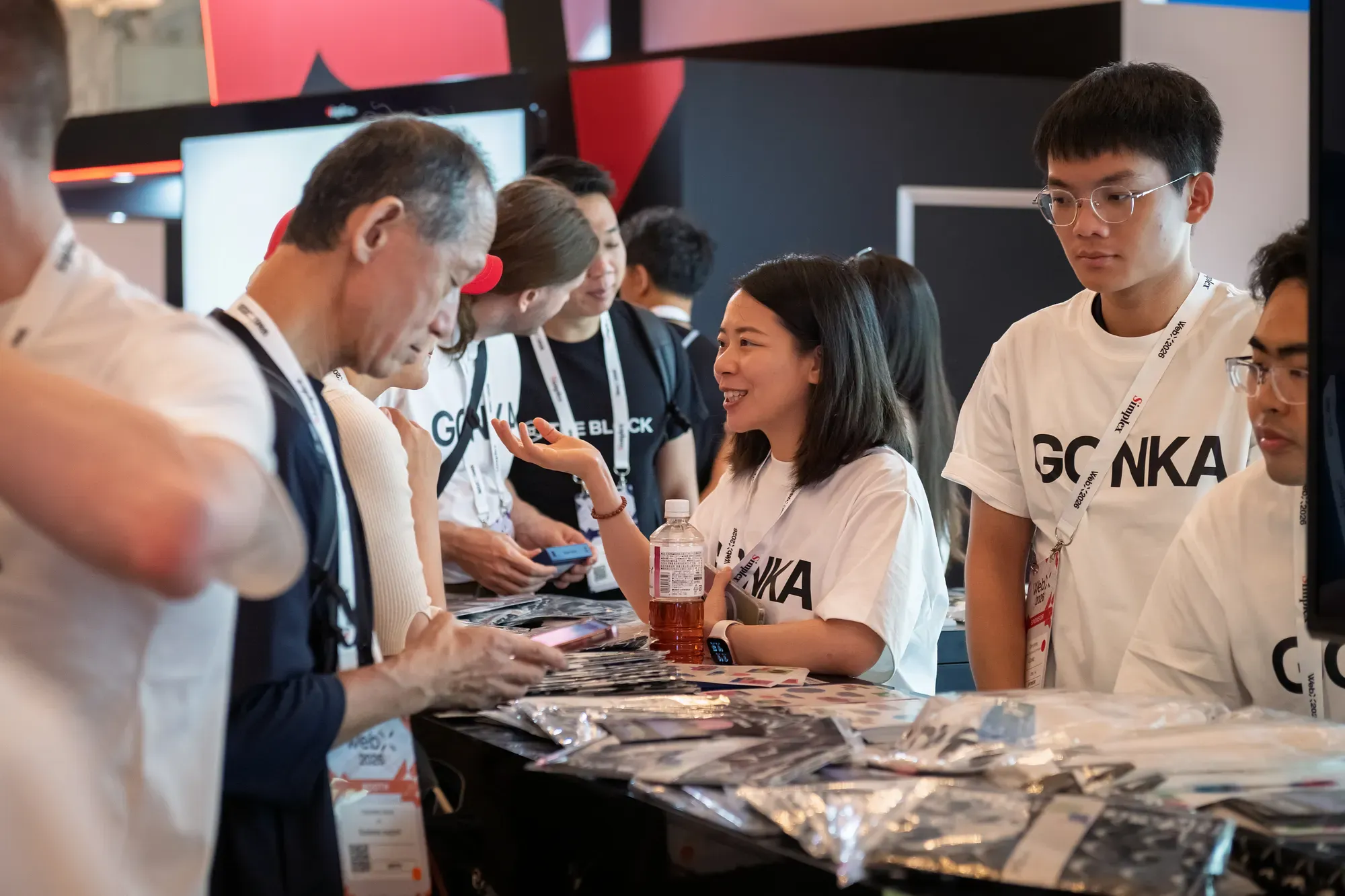
One thing that particularly stood out to him at WebX was the sheer number of events happening around the main conference:
“There were so many side events. I don’t remember seeing anything like this at conferences I had attended in Moscow before. Sure, there are afterparties and some side events there, but here something was happening almost every hour. Some people rented VIP areas in restaurants, others rented small conference halls — there were separate events going on constantly”.
Together with other Gonka participants, he moved between the main venue and these events for most of the day. What initially looked like a regular conference trip quickly turned into something much more intensive.
“If you are going there with the idea that you want to help Gonka and participate actively, you have to understand that you are not going on vacation or just walking around a conference for an hour. It is real work.
You wake up and go straight to the conference, then you have side events until late in the evening, you get back to the hotel, sleep, and start again the next day. Out of those two and a half days, I probably had about two hours to myself in total,” Demian says.
From the perspective of an active member of the Gonka community, the value of such events goes beyond individual conversations and contacts. For a young project, simply being known can make it much easier to start a conversation with a potential partner.
“Let’s say we want to talk to someone about a partnership. They look at it and think: ‘Gonka? What is that?’ There are barely any articles, they have never seen it at conferences before — and they may simply not respond. Events like this give you a way to make yourself visible. People start noticing you and talking about you,” he notes.
What opportunities did WebX open for Gonka?
After conferences, company names usually become public only once negotiations have resulted in actual agreements. At an early stage, participants generally prefer not to create expectations that may not materialize.
But for Gonka Community Blog, they shared a little more about which WebX contacts currently look the most promising.
Isabel Yang highlights two areas that could have the most direct impact on Gonka: new computing capacity and large commercial inference users.
“The first is a large enterprise with private data-center infrastructure that has already initiated hosting operations. In the short term, this can add real computing capacity and provide valuable operational experience in onboarding enterprise infrastructure. In the medium term, it could become a durable source of capacity for the network.
The second is our engagement with major AI-inference consumers interested in long-term commercial network utilization. If those discussions convert, they could bring sustained real-world workloads — the demand-side counterpart to expanding Gonka’s compute supply.
We would prefer not to name the organizations until the relationships are formalized,” Isabel says.
Sergey Ulankin also believes it would be premature to name specific companies before negotiations are completed. Among the WebX contacts, however, he is particularly interested in potential commercial inference users — companies that already need large amounts of compute and for which infrastructure costs are a significant part of the business.
“For example, after the conference I spoke with a team building a high-frequency trading platform where AI agents make decisions about buying and selling assets. Systems like this consume a huge amount of inference, so compute costs are a major part of their business. There were also several other companies among the WebX contacts building products around AI agents.
These are exactly the kinds of clients that could give the network a meaningful boost: they could go beyond simply testing Gonka and become large, long-term users of the network,” Sergey explains.
Demian G. looks at the conference’s impact beyond individual leads. In his view, a single conference is unlikely to produce a major result on its own. The real value comes when Gonka appears at international events regularly.
“We have very few ways to make ourselves known. And I don’t think it makes much sense to do one conference like this and expect some huge payoff. This is more about regular work. You have to keep going to different conferences.
If you do it regularly, then in a year or two everyone will at least know that you exist. And that makes it much easier for the protocol to start conversations,” Demian notes.
He also sees stronger relationships within Gonka itself as one of the outcomes of WebX. Much of the ecosystem’s interaction happens online, so meeting in person for the first time also had value.
“We met each other in person, and the level of mutual trust went up a little. For me, moving relationships from online to offline always helps. After you meet someone in person, communication usually changes for the better,” Demian adds.

So what did WebX actually deliver?
It is still too early to judge the success of WebX by the number of registrations or business contacts alone: many of the potentially important discussions are still ongoing.
But some things are already clear. Gonka showed that different parts of its ecosystem can fund and organize a major international presence together. The conference also generated a measurable inflow of new users and opened several potentially important paths on both sides of the network — new computing capacity and new demand for inference.
The next test matters more: how many of the contacts made in Tokyo will turn into connected GPUs, real AI workloads, and long-term partnerships?
And if the participants are right that the impact of conferences like WebX builds gradually over time, it should be viewed not as a standalone campaign, but as the beginning of a more consistent international presence for Gonka.
Your support helps keep the blog independent
It helps us spend more time on analysis and original stories about the network.